


 Celebrating
33 Years
33 Years
The History of The Nutcracker: Facts, Fun Facts & Costume Secrets

A North Central Ballet Educational Feature
For more than a century, The Nutcracker has enchanted audiences around the world. Today, it is one of the most widely performed ballets in history—but the story behind it is even more magical than the performance itself. From its surprising origins to intricate costumes and backstage traditions, The Nutcracker is filled with fascinating details that even longtime audience members don’t always know.
As we celebrate North Central Ballet’s 31st annual production, here is a richly detailed look at the ballet’s history, rare facts, and the craft behind the tutus, tiaras, and costumes that make this holiday classic sparkle.

Origins of The Nutcracker Ballet
From Literature to Ballet
Before The Nutcracker made it to the stage, it lived on the page. The original story, “The Nutcracker and the Mouse King” (1816) by E.T.A. Hoffmann, was far darker than the ballet audiences know today. It featured:
- A seven-headed Mouse King
- A mysterious and eerie tone
- A detailed transformation curse placed on the Nutcracker Prince
In the story, the heroine (Marie, not Clara) injures herself fighting the mice, and her family believes the entire adventure was simply her imagination.
Dumas’ Softer Adaptation
In 1844, French author Alexandre Dumas rewrote Hoffmann’s tale into a gentler version. Dumas simplified the plot, softened the characters, and renamed the heroine Clara. This is the version choreographers Petipa and Ivanov used when creating the ballet we know today.

The 1892 Premiere: A Surprising Beginning
A Mixed Reception
The Nutcracker premiered on December 18, 1892, at the Mariinsky Theatre in St. Petersburg. The music by Tchaikovsky was praised immediately, but the ballet itself received mixed reviews.
Critics felt:
- The plot was too simple
- There were too many children onstage
- The lead characters had little dancing
- The Sugarplum Fairy’s pas de deux overshadowed Clara and the Prince
Yet despite the lukewarm reception, the score became an instant classic.

Tchaikovsky’s Mixed Feelings
Tchaikovsky originally believed the music was “too light.” Ironically, it is now one of the most recognized and beloved ballet scores in history.
How America Revived The Nutcracker
The ballet did not truly become a Christmas tradition until it arrived in the United States.
Key turning points:
- 1940: Disney featured the music in Fantasia
- 1944: San Francisco Ballet created the first full U.S. production
- 1954: George Balanchine’s production at New York City Ballet cemented it as a holiday tradition
From there, it spread nationwide.

Little-Known Nutcracker Facts
Sugarplums Aren’t What You Think
The original “sugarplum” was a hardened sugar candy, often built around nuts or spices—closer to a sugared almond than a fruit.
The Celesta Was a Secret Weapon
The instrument that gives the Sugarplum Fairy her iconic sound—the celesta—was brand new when Tchaikovsky discovered it. He hid it from other composers so he could debut it in The Nutcracker.
Christmas Trees Forever Changed
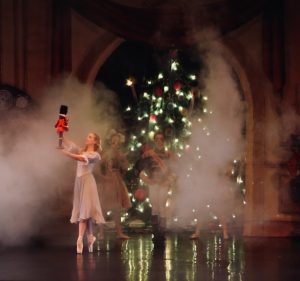
The magical growing Christmas tree from Act I inspired countless theaters and public displays. Some modern trees grow from 12 feet to over 40 feet tall onstage.
Mother Ginger’s Costume Is a Machine
The famous Mother Ginger skirt can weigh over 100 pounds. Depending on the company, the “skirt” can be:
- A rolling platform
- A lightweight steel cage
- A wooden structure
The dancer inside often sees only through a tiny viewing slit.
Snowfalls Once Used Unusual Materials
Early productions used torn paper, feathers, and even potato flakes as artificial snow. Some theaters still use potato flakes today for their sparkle and non-melting texture.

Costumes & Tutus: The Craft Behind the Magic
Building a Classical Tutu
Professional pancake tutus require 30–60 hours of labor. A single costume may include:
- 7–12 layers of tulle
- Hand-tacked pleating
- A perfectly fitted basque
- Strategic placement of hooks for lightning-fast quick changes
Sugarplum Fairy, Dewdrop, and Spanish often feature the most ornate designs.

Why Gems Sparkle Onstage
Stones and crystals are added not only for beauty but to amplify:
- Light reflection
- Stage visibility
- Movement lines
Larger gems read better under stage lighting, even from the back row.

The Power of the Corps de Ballet
Snow and Waltz of the Flowers depend on the corps more than any other roles. The visual impact comes from:
- Precise spacing
- Angle consistency
- Unified port de bras
- Perfect timing
The corps creates the “magic” long before the soloists appear.

The Science of Pointe Shoes
Dancers may go through multiple pairs of pointe shoes during a single Nutcracker season. Each pair is:
- Broken in
- Hardened with glue
- Lightly shaved
- Sewn by hand
- Customized for foot shape and role demands
Sugarplum and Dewdrop dancers often use extra-quiet shoes to avoid noise during delicate musical passages.

Themes and Symbolism in The Nutcracker
Childhood Wonder
Clara’s dreamlike journey symbolizes imagination, transformation, and coming of age.
Courage and Loyalty
Her bravery in saving the Nutcracker Prince reflects loyalty and youthful courage.
A Celebration of World Traditions
Act II presents a stylized “world tour” of dance divertissements—a 19th-century tribute to global cultures.
Transformation and Growth
Clara’s awakening at the end of the ballet shows her changed—braver, wiser, and filled with possibility.

North Central Ballet’s 31-Year Tradition
North Central Ballet has proudly presented The Nutcracker to thousands of families across North Texas for more than three decades. Our classical integrity, beautifully layered storytelling, and dedication to professional-level training set our production apart.
NCB’s Nutcracker also plays a powerful role in arts education. Through:
- School performances
- Sensory-friendly shows
- Community partnerships
- Outreach to thousands of local students
We introduce new generations to the magic of classical ballet each season.

Learn More About Our Sensory-Friendly Production
Why This Ballet Endures
More than any other ballet, The Nutcracker invites people in. Children see themselves in Clara. Families make holiday memories together. Dancers dream of embodying roles from Snowflake to Sugarplum Fairy.
It is a story that grows with each person who watches it.
North Central Ballet is honored to continue this cherished tradition for our community.

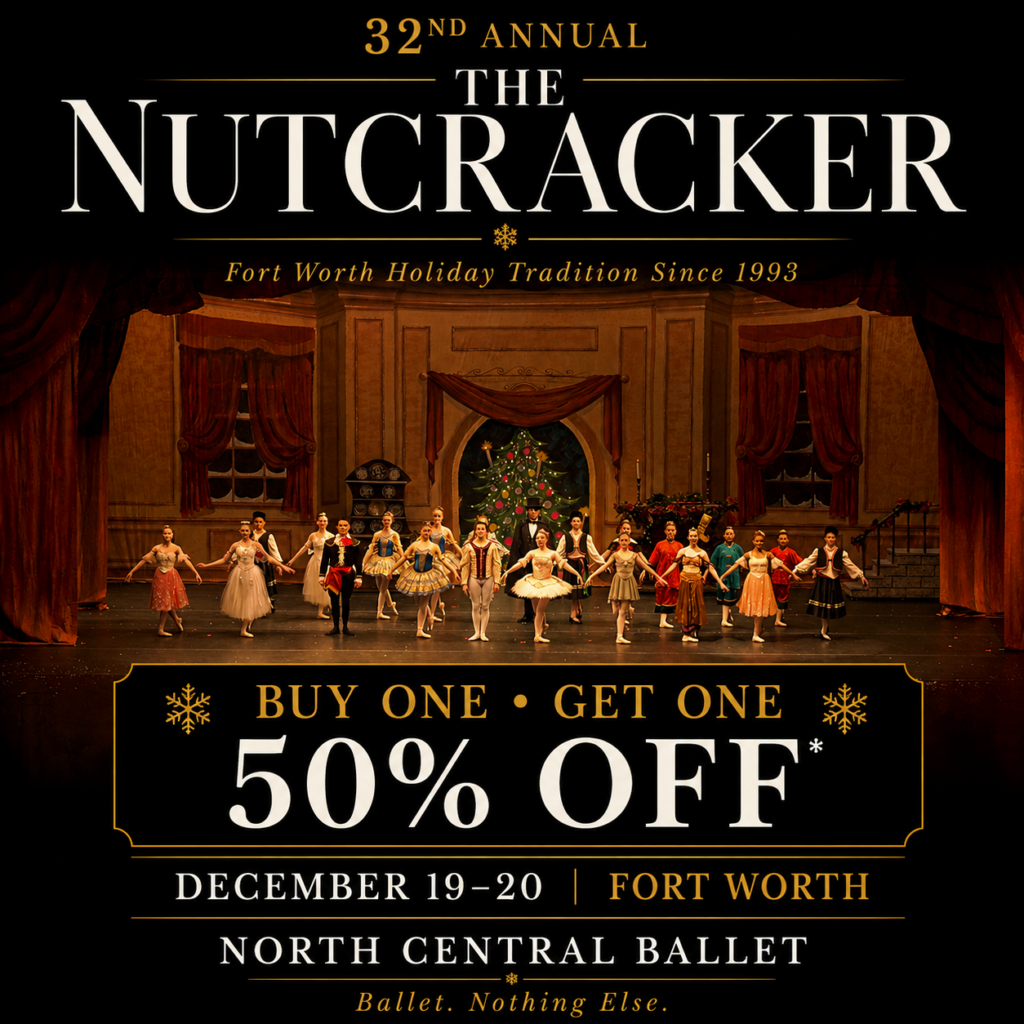
Join us for our 31st Annual Production, December 19 and 20, 2025
Click HERE to Purchase Tickets

Click the link below to learn about all the wonderful programs
North Central Ballet has to offer!
North Central Ballet Winter Hub
